Sorrento is a beautiful town perched on a cliff high above the sea with views of Vesuvius and the islands in the Bay of Naples . Use this website to help you plan a visit to this elegant southern Italian resort and find your way to the best beaches and some lovely villages and towns along the Sorrentine peninsula that are perhaps less well known to tourists.

Showing posts with label Hotels. Show all posts

20210825

Henrik Ibsen’s inspirational time in Sorrento

Famous playwright entered his Golden Age while living in resort

The Norwegian writer Henrik Ibsen spent many years living in Sorrento
The Norwegian writer Henrik Ibsen
spent many years living in Sorrento
Disenchanted with his native Norway, the playwright Henrik Ibsen took himself and his family into self-imposed exile in 1864 and settled in the beautiful resort of Sorrento.

Ibsen has since become the most frequently performed dramatist in the world after Shakespeare and was one of the most influential playwrights of his time.

He started out working as a theatre director as well as writing plays, but he felt under-appreciated and was in serious financial difficulties when he left Norway to go to live in Sorrento.

His 1865 play, Brand, brought him the critical claim he sought, along with financial reward. His next play, Peer Gynt, written in Sorrento and published in 1867, was also a success and Edvard Grieg composed incidental music and songs for it, which are still performed today.

Success made Ibsen more confident and he began to introduce more of his own beliefs and judgements into his writing, entering what is often considered his Golden Age as a playwright. Ibsen was nominated for the Nobel Prize in Literature in 1902, 1903 and 1904.

He stayed in Italy for four years before going to Dresden in Germany, seldom returning to Norway for 27 years.

The plaque commemorating Ibsen's stay is just next to the hotel's elegant bridge across Via Vittorio Veneto
The plaque commemorating Ibsen's stay is just next
to the hotel's elegant bridge across Via Vittorio Veneto
The Imperial Hotel Tramontano in Via Vittorio Veneto in Sorrento record on their website that Ibsen stayed at the hotel in 1881 for six months, as he was still enchanted with the resort, and, inspired by the beautiful views of the Bay of Naples, he wrote his 1881 play, Ghosts, (Gli spettri) while in residence there.

Sorrento have commemorated the visits of the famous playwright to their resort with a small park named after him in the historic centre.  Next to the Roman archway in Via Antonino Sersale, the Parco Henrik Ibsen has been described by visitors as providing quiet respite from the busy streets of Sorrento, with a children’s play area, bar and restaurant.

There is a plaque, recording Ibsen’s 1881 stay in Sorrento, on an exterior wall of the Imperial Hotel Tramontano in the elegant Piazza Vittoria.

The Imperial Hotel Tramontano, in part of which, in 1544, the Renaissance poet, Torquato Tasso was born, has since welcomed many famous writers, artists and musicians, who have been inspired by its stunning setting.


Home

20200130

Grand Hotel Cocumella Sorrento


Historic hotel has been a haven for writers


The oldest hotel in Sorrento, the Grand Hotel Cocumella at Sant’Agnello, dates back to 1777.

The entrance to the Grand Hotel Cocumella in the Sant'Agnello district, which is the oldest hotel in Sorrento
The entrance to the Grand Hotel Cocumella in the Sant'Agnello
district, which is the oldest hotel in Sorrento 

Originally built as a Jesuit monastery in the 16th century, the Cocumella sits right on the edge of a cliff over- looking the bay of Naples and has a stunning view of Vesuvius from its terraces and gardens.

The interior of the five-star hotel reflects its long history, with walnut furniture, old majolica floors, frescoed ceilings and antique mirrors.

Over the centuries it has welcomed writers such as Goethe, Mary Shelley, Hans Christian Anderson and Francis Marion Crawford along with many artists, statesmen and noblemen who visited it while on the Grand Tour.

Jesuit priests lived in the building from 1637 until it became a guesthouse in 1777. It became a hotel in 1822. 

The cloister at the Cocumella, with its central well, has been turned into a dining room
The cloister at the Cocumella, with its central well, has
been turned into a dining room
In 1978, the Cocumella was refurbished by architect Nino di Papa, with the focus on restoring its elegant features and recapturing its peaceful atmosphere.

The antique cloister with a grey stone well in the centre is now a dining room and the old chapel is used for concerts.

The huge gardens have a swimming pool and tennis court and there is a lift down to a private sun deck. The hotel has three restaurants and a cocktail bar that opens on to a terrace overlooking the bay of Naples.

One of the Grand Hotel Cocumella’s unique facilities is Vera, a 30 metre sailboat built in 1880, which is available for guests to charter for excursions to Capri and the Amalfi coast.

The hotel has 48 rooms, all different, which either have a sea view or a view over the gardens or citrus groves.

The hotel has produced its own history, which includes details of Mary Shelley's stay
The hotel has produced its own history, which
includes details of Mary Shelley's stay
The novelist Mary Shelley stayed at the Cocumella in June 1843 with her son Percy Florence Shelley. It was more than 20 years after her husband, the poet Percy Bysshe Shelley, drowned off the coast of Tuscany.

Since the poet’s death Mary had suffered a hard life bringing up her son alone in London, depending on her writing for economic survival.

Of her stay in Sorrento she wrote: ‘The place is beautiful beyond expression –the weather exactly one’s beau ideal - warm and no heat. I go about on mules in the evening. Sometime we go on the sea.  But alas! we leave this place – too soon- & I plunge again into the shadows and worries of life!’

The Grand Hotel Cocumella is only a 15 minute walk from the centre of Sorrento but has the benefit of a peaceful location in Via Cocumella at Sant’Agnello, a small neighbouring resort.

Home


20170304

Lucio Dalla – musician who loved Sorrento


The singer-songwriter Lucio Dalla on stage in 2009
The singer-songwriter Lucio Dalla
on stage in 2009
The singer-songwriter Lucio Dalla was born on this day in 1943 in Bologna.

Dalla is most famous for composing the song, Caruso, in 1986, after staying in the suite the great tenor used to occupy overlooking the sea at the Grand Hotel Excelsior Vittoria in Sorrento.

The song has been covered by many other artists since, including Luciano Pavarotti and Julio Iglesias.

In the book Caruso the Song - Lucio Dalla e Sorrento,  Raffaele Lauro, a writer from Sorrento, recalls that Dalla booked the very suite at the Excelsior Vittoria that Caruso had occupied during the final weeks of his life in 1921. While staying there, Dalla composed the song, inspired by his love for Sorrento, his respect for the great tenor and his fondness for classic Neapolitan songs.

The Fiorentino family, who owned the Excelsior Vittoria, were later to dedicate a suite to Dalla.

Dalla had started playing the clarinet when he was young and joined the Rheno Dixieland Band in Bologna along with the future film director, Pupi Avati.

Avati was later to say that his film Ma quando arrivano le ragazze? was inspired by his friendship with Dalla.

Lucio Dalla was born in Bologna but had a  deep affection for Sorrento
Lucio Dalla was born in Bologna but had a
deep affection for Sorrento
In the 1960s the band won first prize in the traditional jazz band category at a festival in Antibes. After hearing Dalla’s voice, singer-songwriter Gino Paoli suggested he try for a solo career as a soul singer, but his first single was a failure.

Dalla had a hit with 4 Marzo 1943, originally entitled Gesù Bambino, but the title was changed to the singer’s birth date so as not to cause offence.

In the 1970s, Dalla started a collaboration with the Bolognese poet Roberto Roversi, who wrote the lyrics for three of his albums.

When the association ended, Dalla decided to write the lyrics for his songs himself and his subsequent Banana Republic album was a success in 1979.

The version of Caruso sung by Pavarotti sold more than nine million copies and Dalla was invited to sing Caruso in a duet with Pavarotti in a 'Pavarotti and Friends' concert in Modena in 1992. Andrea Bocelli included his version of the song on his first international album, Romanza, which sold more than 20 million copies worldwide.

Dalla was made a Commander and subsequently a Grand Officer of the Order of Merit of the Italian Republic and was awarded an honorary degree by the University of Bologna.

The singer songwriter died three days before his 69th birthday in 2012, after suffering a heart attack in a hotel in Montreux in Switzerland, where he had been performing the night before.

About 50,000 people attended his funeral in Bologna and his hit song, Caruso, entered the Italian singles chart after his death, peaking at number two for two consecutive weeks.The single was also certified platinum by the Federation of the Italian Music Industry.

The Grand Hotel Excelsior Vittoria, where Caruso stayed and which inspired Lucio Dalla to write his most famous song
The Grand Hotel Excelsior Vittoria, where Caruso stayed and
which inspired Lucio Dalla to write his most famous song
The Grand Hotel Excelsior Vittoria is a familiar landmark as you approach Sorrento by sea. You will see the three 19th century hotel buildings high on the cliff above the port of Marina Piccola when you arrive by boat from Naples or the islands. 

The Excelsior Vittoria is probably Sorrento ’s most famous hotel and it has now achieved global recognition as part of the Leading Hotels of the World group. From the imposing wrought-iron entrance gates in Piazza Tasso, a long driveway lined with orange trees leads to the entrance and reception area.

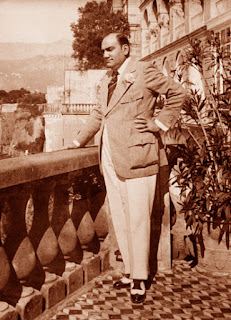
At the back of the hotel, the terrace has panoramic views over the bay of Naples and of Vesuvius across the water. Tenor Enrico Caruso was famously photographed in front of those views during his final stay in 1921.

The Excelsior Vittoria had been opened as a hotel by the Fiorentino family in 1834 and is still, to this day, run by their descendants.

(Picture credits: Dalla (top) by Philippe Roos; Dalla (centre) by Lucarelli; both via Wikimedia Commons)

Home

20160802

Birth of Francis Marion Crawford


Sorrento’s famous American resident, the writer Francis Marion Crawford, was born on this date in 1854 in Bagni di Lucca in Tuscany.

A prolific novelist, Crawford became known for the vividness of his characterisations and the realism of his settings, many of which were places he had visited in Italy.

He chose to settle in later life in Sant’Agnello, just outside Sorrento, where he even had a street named after him, Corso Marion Crawford
Villa Crawford from the sea


Crawford was the only son of the American sculptor, Thomas Crawford. He spent his childhood going backwards and forwards between Italy and America and studied at various American and European Universities.

He spent some time in India, where he found the inspiration for his first successful novel, Mr Isaacs, which was published in 1882.

In 1883 he returned to Italy to settle there permanently. He lived at the Hotel Cocumella in Sant’Agnello to begin with. He then bought a farmhouse nearby, from which he developed the Villa Crawford, an impressive clifftop residence easily identifiable from the sea.


Hotel Cocumella at Sant'Agnello
The villa, which was donated to a religious order by his descendants, has been recently refurbished to include rooms let out to guests. For more information click here.

Crawford found inspiration for his writing while living in Sorrento and many of his later novels have Italian settings, such as Don Orsino, published in 1892, which is about the effects of social change on an Italian family.

His novels sold well in America and he would often visit the country to deliver lectures on Italian history, about which he wrote several books.

Crawford died at the Villa Crawford in Sant’Agnello after suffering a heart attack in 1909.

The Corso Marion Crawford leads down to the sea from Corso Italia, the main road connecting Sant’Agnello with the resort of Sorrento.

The historic Hotel Cocumella, where Crawford stayed during the 1880s, is in Via Cocumella, just off Corso Marion Crawford. 

20160225

How Sorrento remembers the great tenor Enrico Caruso, born on this day in 1873

The photo shows Caruso on the balcony of the Excelsior Vittoria just a few weeks before he died
The famous picture of Enrico Caruso on the
balcony of the Excelsior Vittoria hotel
Operatic tenor Enrico Caruso, who was born on this day in 1873 in Naples, had a special relationship with Sorrento that will forever be remembered thanks to the existence of a picture taken of him only weeks before he died.

It shows Caruso standing on the terrace of the Grand Hotel Excelsior Vittoria, where he could enjoy the stunning view over the Bay of Naples.

The hotel later furnished Suite Caruso with the piano and writing desk used by the opera singer during his visit. The suite inspired the song 'Caruso’ to be written by Italian pop singer Lucio Dalla in the late 1980s while he was staying at the Excelsior Vittoria.

Believed by many opera experts to be the greatest tenor of all time, Caruso graced many of the most famous opera houses in Europe and America during a brilliant 25-year singing career.

He made more than 200 recordings, some dating back to 1902, and was opera's first international star.

Born in Via San Giovanello agli Ottocalli in Naples and baptised the next day in the nearby church of San Giovanni e Paolo, he was apprenticed to a mechanical engineer at the age of just 11 years and also worked alongside his father in a factory.

But at the same time he was singing in his church choir and was told his voice showed enough promise for him to consider becoming a professional singer.

He was encouraged by his mother until she died in 1888. To earn money, he started to work as a street singer in Naples, progressing to singing Neapolitan songs as entertainment in cafes.

Determined he would become an opera singer, Caruso took singing lessons before, during and after his compulsory military service.

He made his stage debut in 1895 at the Teatro Nuovo in Naples in Domenico Morelli’s L’amico Francesco, having been recommended by a musician who had heard him sing.

The Basilica of San Francesco di Paola in Naples, where Caruso's funeral took place
The Basilica of San Francesco di Paola in Naples,
where Caruso's funeral took place
Caruso went on to perform at other theatres throughout Italy and was given a contract to sing at La Scala in Milan in 1900. On his debut on December 26 he sang Rodolfo from Puccini’s La Boheme, conducted by Arturo Toscanini.

The following year he appeared in Monte Carlo, Warsaw, Buenos Aires and before the Tsar of Russia in St Petersburg.

Caruso took part in a grand concert at La Scala organised by Toscanini in 1901 to mark the death of Giuseppe Verdi.  A month later he was engaged to make his first group of recordings for a gramophone company using a hotel room in Milan. The recordings quickly became best sellers and Caruso’s fame spread.

He travelled to New York in 1903 to take up a contract with the Metroplitan Opera, making his debut in Rigoletto in November.

A few months later Caruso began his association with the Victor Talking Machine Company. His 1904 recording of ‘Vesti la giubba’ was the first recording ever to sell a million copies.

He made 863 appearances at the Met, attracting a substantial following from among New York ’s Italian immigrants. He continued to release recordings until close to his death in 1921.

Caruso’s voice extended up to high D-flat in its prime and grew in power and weight as he became older. His singing can still be enjoyed by people today as his original recordings have been remastered and issued as CDs and digital downloads.

The singer’s health began to deteriorate in 1920 and he returned to Naples to recuperate. He was planning to go to a clinic in Rome in August 1921, but while he was staying overnight at the Albergo Vesuvio in Naples on the way to Rome his condition worsened and he died there, aged 48.

The King of Italy, Victor Emmanuel III, opened the Royal Basilica of San Francesco di Paola -- on the west side of the Piazza del Plebiscito in Naples -- for his funeral, which was attended by thousands of people.

The plaque outside the Grand Hotel Excelsior Vittoria commemorating the life of Enrico Caruso
The plaque outside the Grand Hotel Excelsior Vittoria
commemorating the life of Enrico Caruso
The Basilica is similar in design to the Pantheon in Rome with a portico resting on columns and a high dome in the middle. Caruso’s body was taken through the streets of Naples in a horse-drawn hearse and he lay in state before his funeral so that people could pay their respects.

In Sorrento, there is a plaque in his name at the main entrance gate to the Grand Hotel Excelsior Vittoria, which is just off Piazza Tasso.

Home

20120709

Live like an emperor at Sorrento’s stunning Bellevue Syrene


The Bellevue Syrene enjoys a spectacular clifftop position
The Bellevue Syrene, in the left of the picture, enjoys
a spectacular clifftop position

You can breakfast on a terrace overlooking the bay of Naples during a stay at the five star Bellevue Syrene Hotel in Sorrento.
Many guests have praised the spectacular location of the hotel on the site of a former Roman villa built high above the sea to give wonderful views of Vesuvius from the rooms and terraces.
The villa is believed to have once provided a home for the Emperor Augustus when he was in exile for political reasons. It was rebuilt as a private home in 1750 and converted to an hotel in 1820.
The main entrance is in Piazza Vittoria, which is within walking distance of the best bars, restaurants and shops in Sorrento and handy for the port at Marina Piccola.
The Bellevue Syrene has 30 suites and rooms, some with large terraces overlooking the sea.
There is a choice of restaurants and dining terraces, including the terrace of the Villa Pompeiana, a copy of the House of the Vetti at Pompei that was constructed in the grounds at the beginning of the 20th century.
The hotel also has an extensive wine cellar housed in an original Roman grotto.
The Bellevue Syrene has recently been renovated to provide guests with up to the minute facilities such as a beauty centre, gym, pool, library and free wifi throughout the whole building.
Distinguished former guests include Vittorio Emanuele III, many members of the European aristocracy and writers such as Ivan Turgenev and the French poet De Lamartine.

Check prices at the Hotel Bellevue Syrene with venere.com and Hotels.com

Home

20120430

Wonderful views draw you back to the Hotel Dania


The Hotel Dania
A really good Italian hotel will make you feel comfortable and at home as quickly as possible.
It is nearly 20 years since I stayed at the Hotel Dania in Sorrento for the first time, arriving late at night with my husband and two young children, but I can still remember how we were instantly made to feel welcome and put at our ease by the Acampora family, who own the hotel.
When we woke up the following morning to see the fabulous views from the hotel of the Bay of Naples, our love affair with the Dania began and we have returned to stay there nearly every summer since. 
I have often tried to pinpoint what it is that makes a stay at the Dania so special and I have come to the conclusion it is down to a combination of wonderful features.
The hotel, which is on the Via del Capo at Capo di Sorrento, has a large terrace overlooking the sea with panoramic views that I could never tire of looking at, particularly in the evening, which generally ends with a beautiful sunset over the island of Ischia.
We have a favourite room that has its own terrace, from which you can see the point of land known as Capo di Massa, which has the remains of a Saracen stone tower where the land meets the sea.
View towards Capo di Massa
From the dining room, or our own terrace, we like to see cruise ships going past at night, lit up so they look like glittering diamond necklaces strung out over the sea.
In the morning when we wake up we enjoy watching the ferries and hydrofoils crossing from Sorrento to the islands of Capri and Ischia, or sailing past Capo di Massa to round Punta Campanella and reach the resorts along the Amalfi coast. 


The Hotel Dania is beautifully furnished with traditional antique furniture and local ceramics that have been in the Acampora family for generations. The hotel is very well run by the friendly staff, many of who have remained unchanged over the years and have watched our children grow up, while continually providing us with excellent service.
Although the hotel is not far from for the centre of Sorrento, with two different bus services passing the entrance, you have the feeling that you are out in the countryside as it is surrounded by gardens and there is a path through olive groves overhung by grape vines leading down to the sea.
Sunset over Ischia
There is a long history of a hotel on the spot where the Dania now stands. The 1904 edition of Baedeker’s ‘Italy from the Alps to Naples’ mentions the ‘Pensione Paradis with restaurant’ at Capo di Sorrento.
Villa Paradiso, which contains private apartments, is at the front of the building housing the Hotel Dania looking out on to Via del Capo and was probably the original Pensione Paradis referred to by Karl Baedeker.
Capo di Sorrento is the first of a series of lovely villages and beaches that lie along this side of the Sorrentine peninsula overlooking the Bay of Naples. It is a wonderful base for exploring the Roman ruins and old pathways of this beautiful area, which is not nearly as well known to tourists as the resort of Sorrento itself.
We are not the only family who have fallen in love with the Hotel Dania. Many other guests, of a variety of nationalities, have enjoyed their stay so much they return year after year. Encountering old friends and familiar faces when we arrive each summer contributes to the feeling that we are coming home.
There is a tile on the wall near the entrance to the hotel bearing some Italian words, which roughly translated mean: “In my house, courtesy to the guest is guaranteed.” I can vouch for the fact that the Hotel Dania continues to live up to this promise year after year.


20120326

Famous Faraglioni represent beauty of Capri

I Faraglioni glimpsed from Via Tragara
The huge pointed rocks that rise up from the sea just off the coast of Capri have become an instantly recognisable image of the island.
I Faraglioni symbolise the rugged beauty of Capri and have been extensively photographed.
The three rocks are off Porta di Tragara, a panoramic point not far from Marina Piccola, Capri's main port.
They were created by the erosion of the sea, which broke down walls of rock over the centuries.
The first one is il Faraglione di terra (known as la Stella), which is 109 metres high and is still joined to the island by a narrow strip of rock.
The middle one, il Faraglione di mezzo, is 80 metres high and the furthest one, il Faraglione di fuori (known as Scopolo) is 104 metres high.
Il Faraglione di mezzo has an archway in the middle that small boats can pass through.
The rocks can be admired from several points on the island but you can get close to them by walking down from the centre of the island along Via Tragara to Porto di Tragara.

Hotel with panoramic views over the rocks


If you would like a hotel with a good view of i Faraglioni, consider a stay at Hotel Punta Tragara.
Hotel Punta Tragara
The five star hotel, located at Via Tragara 57, has a series of terraces with wonderful views and you can enjoy lunch or dinner outside overlooking i Faraglioni.
Hotel Punta Tragara offers rooms and suites that are all different because of the choice of panoramic views their occupants can enjoy.
The hotel has a spa and swimming pool and the restaurant and pool bar serve lunch, dinner and bar snacks.

Check prices and availability with AlphaRooms


Home
  

20120225

Sorrento hotel was favourite of Caruso

Entrance to the Grand Hotel Excelsior Vittoria

The brilliant tenor Enrico Caruso was born 139 years ago today in Naples.
Caruso sang to great acclaim at opera houses all over Europe and America during his sadly all too brief career. His 1904 recording of ‘Vesti la giubba’ was the first recording ever to sell a million copies.
Caruso loved Sorrento and his stay at the Grand Hotel Excelsior Vittoria is recognised by a plaque at the entrance gate to the hotel just off Piazza Tasso.
The photograph of Caruso in front of the view from the Excelsior Vittoria’s terrace in 1921 went on to become one of the most famous images that was taken of the tenor.
The hotel subsequently furnished Suite Caruso with the piano and writing desk used by the opera singer during his visit.
The plaque commemorating Caruso
The suite inspired the song ‘Caruso’ to be written by Italian pop singer Lucio Dalla in the late 1980s while he was staying at the Excelsior Vittoria.
Opera fans on holiday in Sorrento might also be interested in visiting nearby Ristorante Museo Caruso in Via Sant’Antonino, a restaurant that commemorates the life and career of Italy’s most famous opera singer.

Check prices and availability with AlphaRooms


20120103

Imperial Hotel Tramontano has inspiring setting in Sorrento

The old wing of the Imperial Hotel Tramontano
that houses the birthplace of Torquato Tasso
The buildings that make up the Imperial Hotel Tramontano in Sorrento include the birthplace of Torquato Tasso, who has come to be regarded as one of the greatest poets of the Italian renaissance.
Tasso was born on 11 March, 1544 in a house at the side of Piazza della Vittoria, which is now a wing of the elegant, four-star hotel.
Tasso travelled about in Italy constantly during the 51 years of his life but came back to Sorrento towards the end to visit his beloved sister Cornelia at a time when he was in deep trouble.
Because of its beautiful location in pretty gardens and overlooking the bay of Naples, it is not surprising that the Imperial Hotel Tramontano has provided inspiration for other famous writers who have stayed there since.
It is believed Milton and Goethe once visited the historic building and, more recently, the hotel has accommodated American writers James Fennimore Cooper and Harriet Beecher Stowe.
The Norwegian playwright Henrik Ibsen is thought to have written Ghosts while enjoying a long stay at the Imperial Hotel Tramontano in the mid 19th century.
The present day hotel, which dates back to 1812, lies in a peaceful setting, hidden away from the main street of Via Vittorio Veneto in beautiful gardens. Guests can enjoy the views of Vesuvius across the bay and superb sunsets while sipping a drink on the Tramontano’s terrace.
The famous song Torna a Surriento was composed by Neapolitan poet and artist Giambattista de Curtis on that very terrace in 1902.
The hotel has large, elegant reception rooms decorated with paintings and antique furniture. The old courtyard and garden have rare Mediterranean and sub tropical plants as well as local flowers and citrus trees.
The luxuriously furnished guest bedrooms and suites either have views of the sea, the courtyard or the gardens.
There is an outdoor swimming pool with its own bar, a 16th century chapel and an elevator to carry guests down to the beach.
The hotel restaurant, which serves breakfast, lunch and dinner, is under the direction of Alfonso Iaccarino, the owner of the famous Don Alfonso restaurant at nearby Sant’Agata su due Golfi.
Only a five minute walk from Piazza Tasso in the centre of Sorrento , the Imperial Hotel Tramontano is in an ideal position. Guests can enjoy the tranquillity of the setting but are within easy reach of Sorrento’s shops and restaurants as well as the port at Marina Piccola and the railway station in Piazza De Curtis to enable them to travel further afield.

20111114

Grand Hotel Excelsior Vittoria has received many distinguished visitors

The entrance to the Excelsior Vittoria off Piazza Tasso
The Grand Hotel Excelsior Vittoria is a familiar landmark as you approach Sorrento from the sea.
You will see the three 19th century buildings that make up the hotel on top of the cliff above the port when you arrive by boat from Naples or the islands.
The Excelsior Vittoria is not only Sorrento’s most famous hotel, it has also achieved global recognition and is now part of the Leading Hotels of the World group.
From the entrance off Piazza Tasso, with its plaque recording the visit of tenor Enrico Caruso, a long driveway lined with orange trees leads to the entrance and reception area.
At the back of the hotel the terrace has panoramic views over the Bay of Naples and of Vesuvius across the water. Caruso was famously photographed in front of that view during his stay in 1921.
The hotel has welcomed many other distinguished visitors, including Richard Wagner, Marilyn Monroe and HRH the Princess Margaret, sister of Queen Elizabeth II of England.
The Excelsior Vittoria was opened by the Fiorentino family in 1834 and is still run by their descendents.
The décor of the hotel exudes 19th century elegance with ornately decorated ceilings and antique furniture.
There are extensive gardens, an outdoor pool and a private lift down to the port.
The Vittoria Restaurant, which overlooks the sea, serves a buffet breakfast and main meals.
There are 75 rooms and 21 themed suites. Suite Margaret, named after the Princess, has a bathroom furnished with red marble from Campania and an enamel bath with classic English taps. The suite has a 25 square metre terrace overlooking the sea.
Suite Caruso is furnished with the piano and writing desk used by the tenor during his stay. The suite inspired the song ‘Caruso’ to be written by Italian pop singer Lucio Dalla in the late 1980s when he was staying at the Excelsior Vittoria as a guest.