Sorrento is a beautiful town perched on a cliff high above the sea with views of Vesuvius and the islands in the Bay of Naples . Use this website to help you plan a visit to this elegant southern Italian resort and find your way to the best beaches and some lovely villages and towns along the Sorrentine peninsula that are perhaps less well known to tourists.

20170212

The Shooting in Sorrento


A new crime novel set against the beautiful backdrop of Sorrento is now available via the Amazon website.

Much of the action in the novel takes place in the ancient streets in the centre of the resort and at locations out along the Sorrentine peninsula.

The Shooting in Sorrento - written by Best of Sorrento editor Val Culley -  is the second Butler and Bartorelli mystery and is the sequel to Death in the High City, which was set in Bergamo in Lombardy.

The main protagonist, journalist Kate Butler, is in Sorrento with her partner, Steve Bartorelli, a retired Detective Chief Inspector, to attend the wedding of the daughter of one of Steve’s Italian cousins.

The couple get to know an English family staying at their hotel in Capo di Sorrento and when tragedy strikes them, Kate feels she should try to help. She has already become friends with the mother of the family, Janice, who is a woman of about her own age.

Steve is distracted by meeting up with Italian relatives he has not seen since he was a child and is also wary of becoming too involved with the family because two of his cousins are senior officers in the Polizia di Stato.
The seafront at Marina di Puolo

But Kate is determined to get justice for her new English friends and joins forces with another visitor to Sorrento to investigate, when it seems the Italian police are focusing all their interest on the English family.

Her enquiries cause her to wander the narrow streets that run parallel to Corso Italia and take her down to the beach at Marina di Puolo, but she ends up putting herself in danger when her sleuthing gets her too close to the truth.

The Shooting in Sorrento is believed to be the first British crime novel set in Sorrento and is available to buy in paperback or as a Kindle edition from Amazon.

Home

20170210

Raffaele Lauro – Sorrento author and politician


Italian Senator and celebrated writer Raffaele Lauro was born on this day in 1944 in Sorrento.

A prolific author and song writer, Lauro has also been an important political figure for more than 30 years.
Raffaele Lauro

He was born in Sorrento and as a young man worked as a receptionist at a number of hotels along the Sorrento peninsula.

After finishing school he went to the University of Naples where he was awarded degrees in Political Science, Law and Economics.

Lauro then won a scholarship from Italy’s Ministry of Foreign Affairs and studied at their diplomatic institute and then later in Paris.

Afterwards he studied for a degree in Journalism in Rome and became director of a scientific magazine. He became a commentator on new technology for Il Tempo in Rome and Il Mattino in Naples and studied Film Directing while living in Rome, also teaching Law of Mass Communications at Rome University.

His political career began when he was elected as a Councillor for Sorrento in 1980. He went on to become Deputy Mayor and, as Councillor for finance, personnel and culture, opened the Public Library of Sorrento and established a theatre school.

Lauro moved back to Rome in 1984 where he held a number of Government posts.

In the general election of 2008, Lauro was appointed a Senator for the People of Freedom Party representing Campania.
The Sorrento peninsula

He was made a member of the Parliamentary Committee of Inquiry into the Mafia and other criminal organisations and later became political advisor to the Minister of Economic Development, Claudio Scajola. In 2015 Lauro joined the Democratic Party of Lazio.

For more than 40 years, Lauro has worked as a freelance journalist, essayist, screenwriter, author and director. He has written about foreign affairs and politics, brought out works of fiction under the pseudonym Ralph Lorbeer and composed music.

In January 2017, at the age of 73, Lauro published a song, Uno straccione, un clown, dedicated to the songwriter Lucio Dalla, to commemorate the fifth anniversary of his death. Lauro had previously written three books about Dalla, the famous singer songwriter from Bologna.


20170127

Meta

Enjoy the beach of Meta Alimuri


The sweep of beach at Meta is in the foreground with the Sorrentine Peninsula stretching into the distance
The sweep of beach at Meta is in the foreground with the
Sorrentine Peninsula stretching into the distance
The long expanse of beach known as Meta Alimuri has made the town of Meta, near Sorrento, a popular seaside resort in its own right.

A short drive, or bus ride, north east of Sorrento, Meta lies between Piano di Sorrento and Vico Equense on the main coastal road going in the direction of Naples .

A road leads down to the beach from the centre of the town, making it easily accessible by car or bus. There is a good stretch of grey, volcanic sand with free access, even though some Meta hotels have their own private sections of beach. From the beach there are lovely views across the Bay of Naples.

There is a bar and restaurant next to the beach, deck chairs and sun umbrellas can be hired and there are opportunities to rent boats.

The name 'Alimuri' is said to relate to a story from the early 16th century when a feared Saracen pirate called Alì landed at the beach only to be confronted by local people.  In the fight that followed, Alì was killed, prompting jubilation in the crowd. The shout of 'Alì muri' went up, telling people in the town above the beach that the enemy had been beaten.

Look for a hotel in Meta with Expedia

Meta has a long history of boat building and by the 19th century its shipyards were producing hundred of boats, with the local women sewing the sails for them in the courtyards of their houses.

Although steamships eventually replaced sailing boats, the shipyards continued to produce the Sorrentine Gozzo, a small sailing and rowing boat that enabled the occupant to fish and row at the same time.

The facade of the Cathedral of Santa Maria del Laura at Meta
It is fascinating to wander through the narrow streets in the historic centre of Meta and see the old houses where boat builders and seafarers lived centuries ago, with their large courtyards.

Meta has a magnificent church, the Cathedral of Santa Maria del Lauro, which is right in the centre of the town, just off the main road.

The church was built in medieval times on the site of an ancient temple after a local deaf and dumb woman was said to have found a statue of the Virgin Mary under a laurel tree and then miraculously had her hearing and speech restored.

It was rebuilt in the 16th century and restored and modified in the 18th and 19th centuries. The wooden door is from the 16th century building and the Chapel of the Madonna del Lauro has an old wooden statue of the Virgin and frescoes from the 18th century.

Meta celebrates the Festa of Santa Maria del Lauro every year on 12 September.

The Line A bus from Sorrento to Meta Alimuri will take you close to the beach, or you can travel on the Circumvesuviana train to Meta and walk down to the beach from the station.

If travelling by car, you will find parking close to the beach, but spaces can be in big demand during the summer months.

Check out hotels in Sorrento from Hotels.com

Home


20170110

Church of the Servants of Mary in Sorrento


Hidden gem in centre of Sorrento


Behind a dark, wooden door in Via Antonino Sersale, just off Corso Italia and close to the Duomo, is the beautiful Baroque Church of the Servants of Mary.

It was built in the 18th century for the congregation of the Servants of Mary (Venerabile Congregazione dei Servi di Maria).
The entrance to the church in Via Sersale

Inside the Church is a wooden statue of the dead Christ, created by an unknown sculptor in the 16th century, which is carried each year on Good Friday through the streets of Sorrento, starting from Via Sersale, by members of the congregation wearing black robes and hoods, representing a funeral procession for the death of Jesus.

The Church was completed in 1762 and includes the old chapel of St Barnaba, which was donated to the congregation in 1717 by Archbishop Filippo Anastasio.

Unusually, the Church is accessed by a marble staircase, which leads to a large vestibule, containing an extensive collection of works of art.

Inside the church, a single aisle leads to a marble altar, behind which there is a painting in an elaborate gilt frame of the Assumption of Mary (Assunzione di Maria al Cielo), the work of Carlo Amalfi in 1774.
Vestibule of Chiesa dei Servi di Maria

In other rooms there are paintings, books and documents, and works of art to see. An unusual 17th century statue of the Virgin Mary wearing an ornate gown interwoven with silver, embroidered in gold, and decorated with pearls and semi precious stones, is believed to be the only piece of its kind in the area.


The Church of the Servants of Mary is open to the public from Thursday to Saturday between 5 pm to 8 pm and on Sundays from 8 am to 12 noon.

20160802

Birth of Francis Marion Crawford


Sorrento’s famous American resident, the writer Francis Marion Crawford, was born on this date in 1854 in Bagni di Lucca in Tuscany.

A prolific novelist, Crawford became known for the vividness of his characterisations and the realism of his settings, many of which were places he had visited in Italy.

He chose to settle in later life in Sant’Agnello, just outside Sorrento, where he even had a street named after him, Corso Marion Crawford
Villa Crawford from the sea


Crawford was the only son of the American sculptor, Thomas Crawford. He spent his childhood going backwards and forwards between Italy and America and studied at various American and European Universities.

He spent some time in India, where he found the inspiration for his first successful novel, Mr Isaacs, which was published in 1882.

In 1883 he returned to Italy to settle there permanently. He lived at the Hotel Cocumella in Sant’Agnello to begin with. He then bought a farmhouse nearby, from which he developed the Villa Crawford, an impressive clifftop residence easily identifiable from the sea.


Hotel Cocumella at Sant'Agnello
The villa, which was donated to a religious order by his descendants, has been recently refurbished to include rooms let out to guests. For more information click here.

Crawford found inspiration for his writing while living in Sorrento and many of his later novels have Italian settings, such as Don Orsino, published in 1892, which is about the effects of social change on an Italian family.

His novels sold well in America and he would often visit the country to deliver lectures on Italian history, about which he wrote several books.

Crawford died at the Villa Crawford in Sant’Agnello after suffering a heart attack in 1909.

The Corso Marion Crawford leads down to the sea from Corso Italia, the main road connecting Sant’Agnello with the resort of Sorrento.

The historic Hotel Cocumella, where Crawford stayed during the 1880s, is in Via Cocumella, just off Corso Marion Crawford. 

20160318

Visit Vesuvius


The volcano that sometimes blows its top


Vesuvius seen from Sorrento across the Bay of Naples
The brooding presence of Vesuvius seen across the
Bay of Naples from Sorrento
Across the sea from Sorrento, Mount Vesuvius, the infamous volcano, looms over the bay of Naples.

Vesuvius last erupted in 1944, 72 years ago today, the only volcano on mainland Europe to have erupted during the last 100 years.

It is an easy excursion from Sorrento to visit the volcano, which is enclosed within Mount Vesuvius National Park.

People continue to live on the volcano’s fertile slopes, which have been famous for centuries for producing excellent wine from the grapes grown there. The whole area was officially declared a national park in 1955. The crater of the volcano is accessible to visitors and there is a road to within 200 metres of it, but after that the ascent is on foot only. 

The crater is about 200 metres deep and has a maximum diameter of about 600 metres. The climb is said to be well worth it because the view from up there takes in the entire coastline from the Gulf of Gaeta to the Sorrento peninsula.

To get there you can take the train from the Circumvesuviana railway station in Sorrento to Ercolano station, from where a shuttle bus will take you to the park.

There is an observatory, a museum, a visitors centre, a restaurant and a shop where you can buy Lacrima Christi del Vesuvio, the wine made from the grapes grown on the volcano.

But you have to sign up for a guided tour to actually descend into the crater.

Vesuvius is most remembered for its eruption in AD 79, which buried the Roman cities of Pompei and Herculaneum and is believed to have killed thousands of people. 

Vesuvius seen from the village of San Sebastiano al Vesuvio, which was largely destroyed in the 1944 eruption
Vesuvius seen from the village of San Sebastiano al Vesuvio,
which was largely destroyed in the 1944 eruption
An eyewitness account of the eruption, in which tons of stones, ash and fumes were ejected from the cone, has been left behind for posterity by Pliny the Younger in his letters to the historian Tacitus.

There were at least three larger eruptions of Vesuvius before AD 79 and there have been many more since. In 1631 a major eruption buried several villages under lava flows and killed about 300 people and the volcano then continued to erupt every few years after that.

The eruption that started on 18 March 1944 and went on for several days, destroyed three villages nearby and about 80 planes belonging to the US Army Air Forces, which were based at an airfield near Pompei. Some of the American military personnel took photographs of the eruption, which have been useful for today’s experts to analyse.

Since 1944 Vesuvius has been uncharacteristically quiet, although it is constantly monitored for activity and an evacuation plan is in place. Experts believe seismic activity would give them between 14 and 20 days' notice of an impending eruption. 

Home


20160225

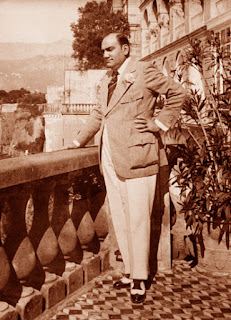
How Sorrento remembers the great tenor Enrico Caruso, born on this day in 1873

The photo shows Caruso on the balcony of the Excelsior Vittoria just a few weeks before he died
The famous picture of Enrico Caruso on the
balcony of the Excelsior Vittoria hotel
Operatic tenor Enrico Caruso, who was born on this day in 1873 in Naples, had a special relationship with Sorrento that will forever be remembered thanks to the existence of a picture taken of him only weeks before he died.

It shows Caruso standing on the terrace of the Grand Hotel Excelsior Vittoria, where he could enjoy the stunning view over the Bay of Naples.

The hotel later furnished Suite Caruso with the piano and writing desk used by the opera singer during his visit. The suite inspired the song 'Caruso’ to be written by Italian pop singer Lucio Dalla in the late 1980s while he was staying at the Excelsior Vittoria.

Believed by many opera experts to be the greatest tenor of all time, Caruso graced many of the most famous opera houses in Europe and America during a brilliant 25-year singing career.

He made more than 200 recordings, some dating back to 1902, and was opera's first international star.

Born in Via San Giovanello agli Ottocalli in Naples and baptised the next day in the nearby church of San Giovanni e Paolo, he was apprenticed to a mechanical engineer at the age of just 11 years and also worked alongside his father in a factory.

But at the same time he was singing in his church choir and was told his voice showed enough promise for him to consider becoming a professional singer.

He was encouraged by his mother until she died in 1888. To earn money, he started to work as a street singer in Naples, progressing to singing Neapolitan songs as entertainment in cafes.

Determined he would become an opera singer, Caruso took singing lessons before, during and after his compulsory military service.

He made his stage debut in 1895 at the Teatro Nuovo in Naples in Domenico Morelli’s L’amico Francesco, having been recommended by a musician who had heard him sing.

The Basilica of San Francesco di Paola in Naples, where Caruso's funeral took place
The Basilica of San Francesco di Paola in Naples,
where Caruso's funeral took place
Caruso went on to perform at other theatres throughout Italy and was given a contract to sing at La Scala in Milan in 1900. On his debut on December 26 he sang Rodolfo from Puccini’s La Boheme, conducted by Arturo Toscanini.

The following year he appeared in Monte Carlo, Warsaw, Buenos Aires and before the Tsar of Russia in St Petersburg.

Caruso took part in a grand concert at La Scala organised by Toscanini in 1901 to mark the death of Giuseppe Verdi.  A month later he was engaged to make his first group of recordings for a gramophone company using a hotel room in Milan. The recordings quickly became best sellers and Caruso’s fame spread.

He travelled to New York in 1903 to take up a contract with the Metroplitan Opera, making his debut in Rigoletto in November.

A few months later Caruso began his association with the Victor Talking Machine Company. His 1904 recording of ‘Vesti la giubba’ was the first recording ever to sell a million copies.

He made 863 appearances at the Met, attracting a substantial following from among New York ’s Italian immigrants. He continued to release recordings until close to his death in 1921.

Caruso’s voice extended up to high D-flat in its prime and grew in power and weight as he became older. His singing can still be enjoyed by people today as his original recordings have been remastered and issued as CDs and digital downloads.

The singer’s health began to deteriorate in 1920 and he returned to Naples to recuperate. He was planning to go to a clinic in Rome in August 1921, but while he was staying overnight at the Albergo Vesuvio in Naples on the way to Rome his condition worsened and he died there, aged 48.

The King of Italy, Victor Emmanuel III, opened the Royal Basilica of San Francesco di Paola -- on the west side of the Piazza del Plebiscito in Naples -- for his funeral, which was attended by thousands of people.

The plaque outside the Grand Hotel Excelsior Vittoria commemorating the life of Enrico Caruso
The plaque outside the Grand Hotel Excelsior Vittoria
commemorating the life of Enrico Caruso
The Basilica is similar in design to the Pantheon in Rome with a portico resting on columns and a high dome in the middle. Caruso’s body was taken through the streets of Naples in a horse-drawn hearse and he lay in state before his funeral so that people could pay their respects.

In Sorrento, there is a plaque in his name at the main entrance gate to the Grand Hotel Excelsior Vittoria, which is just off Piazza Tasso.

Home